


Conditional Pricing •
Some deliverables don’t have a fixed price. Their cost depends on other data in the scope, how many resources, how many doses, and what the group size is. For users scoping complex projects, that meant doing the calculation somewhere else and manually entering the result. The platform wasn’t doing the work it should have been doing.⤵
DISCOVERY
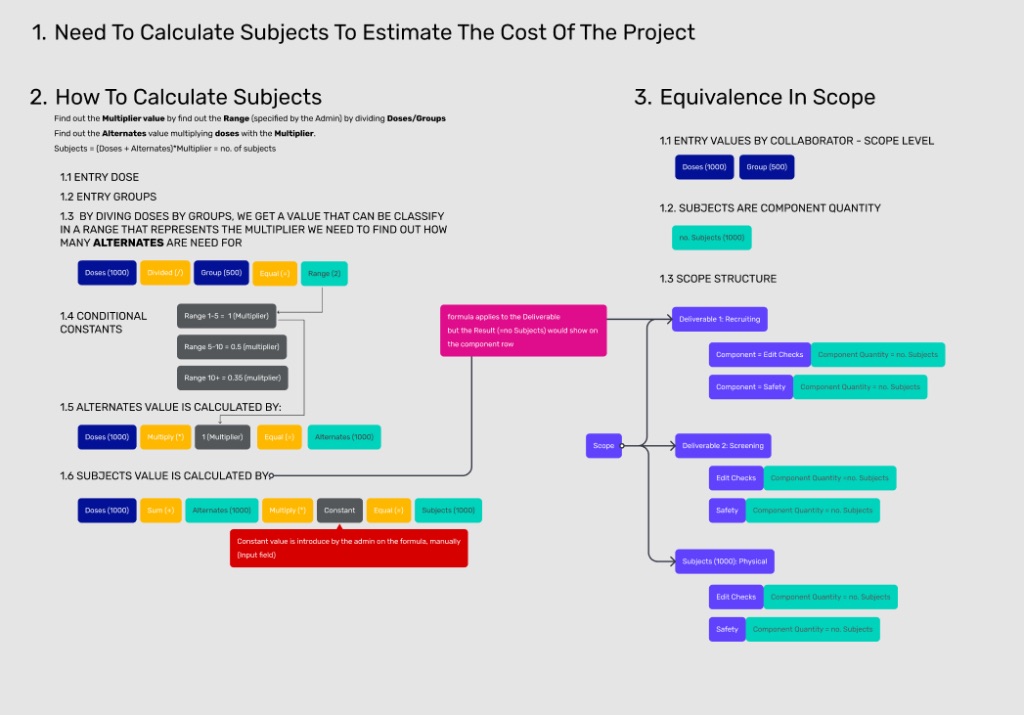
This was a close collaboration between the PM, the client, and me. The client had a well-defined formula structure (values, variables, and conditional constants that shifted depending on ranges), and the job was to understand that logic well enough to bring it onto the platform. I mapped the formula structure into a diagram to see how the variables related to each other and where the conditional branching happened, then used that as the foundation for the design.
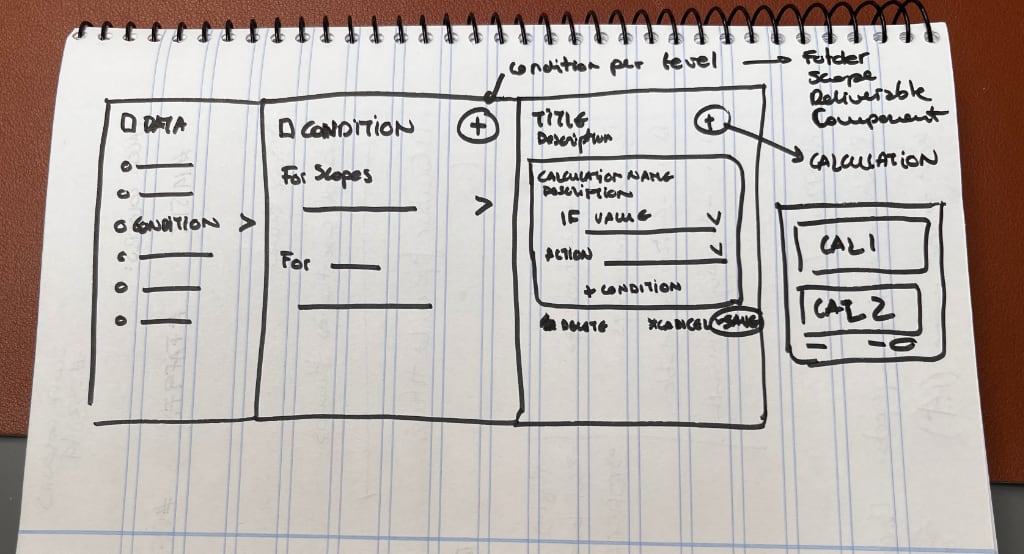
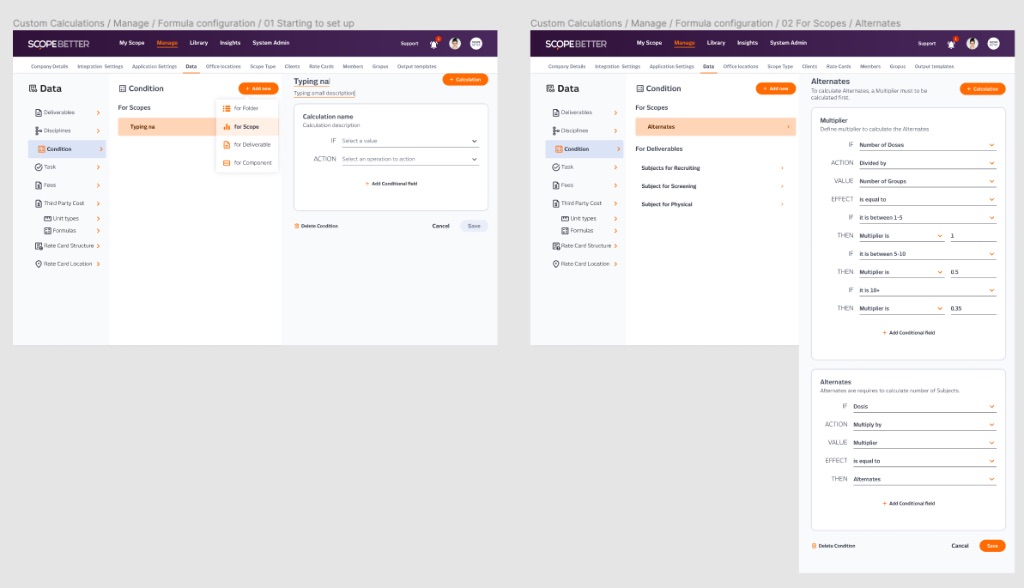
The interaction model that made the most sense was conditional logic forms, interfaces that adapt based on what the user has already entered, guiding them through complexity step by step. Admins needed to define rules, and the interface needed to do the heavy lifting so they didn’t have to think about the underlying logic while building.
WHAT I DID
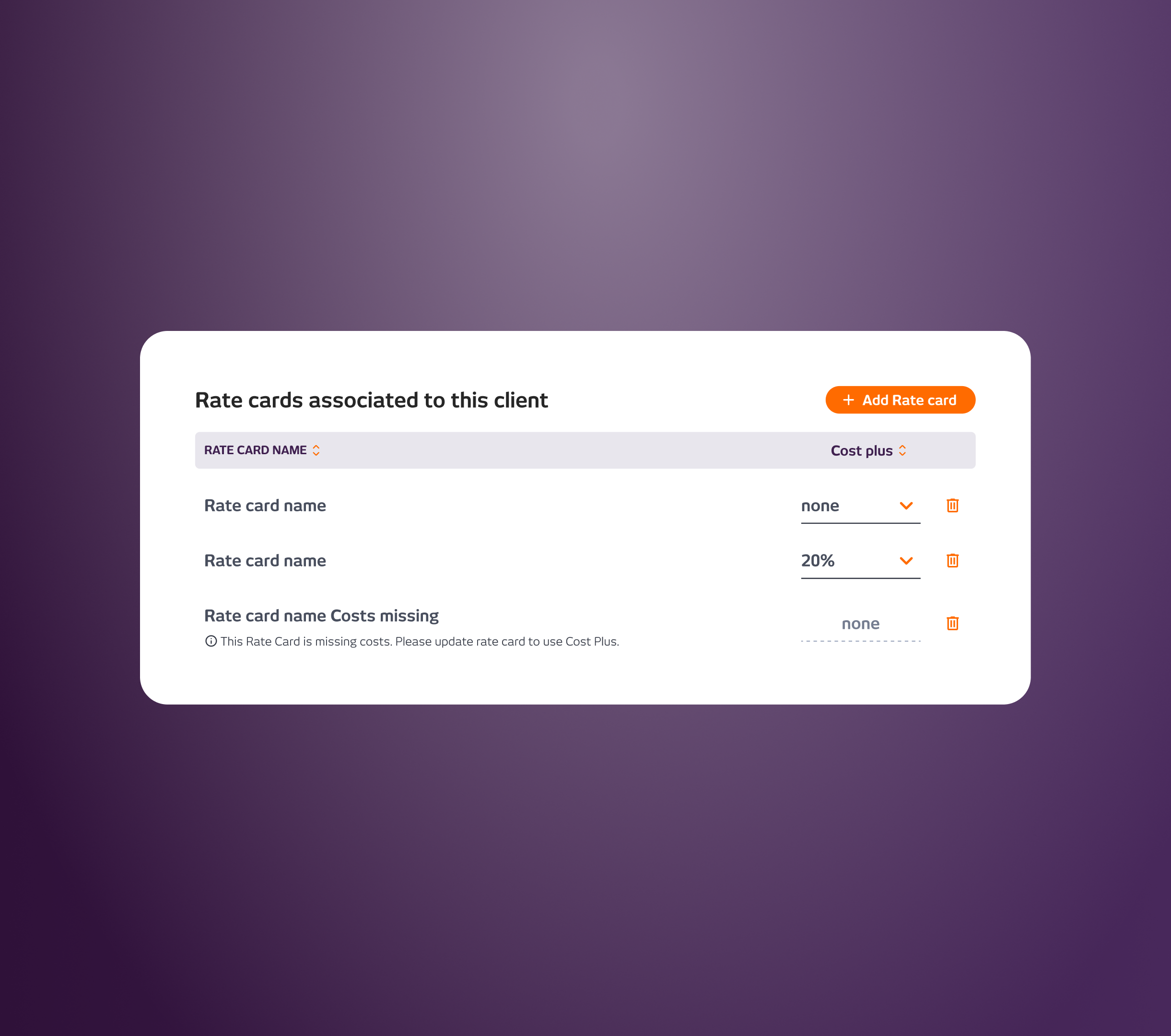
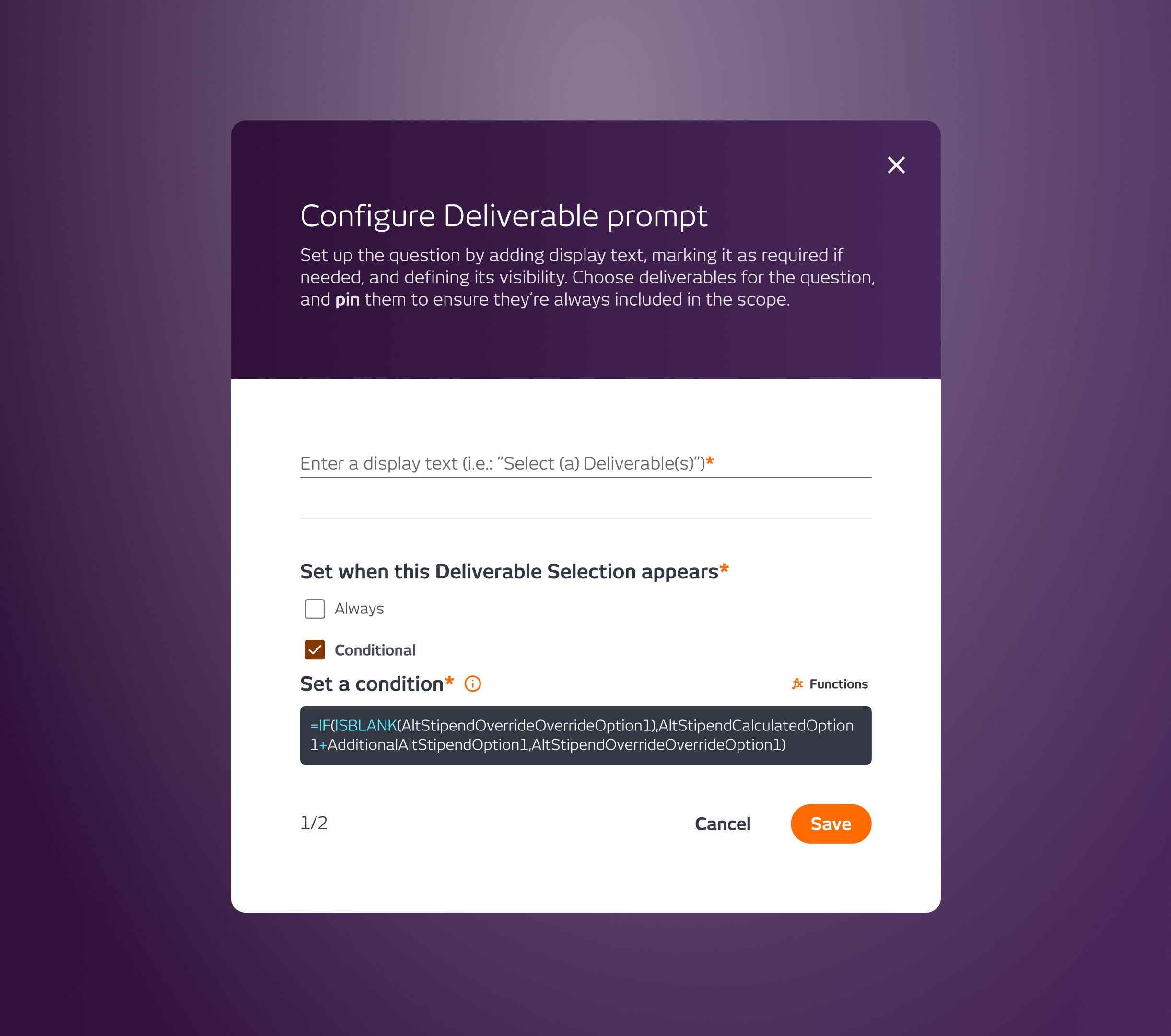
Working from the logic map, I designed a guided configuration interface at deliverable level. Admins could define the variables relevant to their scope, set the conditional ranges that determined the multiplier, and build the formula that calculated the final cost. Each step led the user through the logic in sequence, reducing the chance of errors and removing the need for any technical knowledge to configure it.
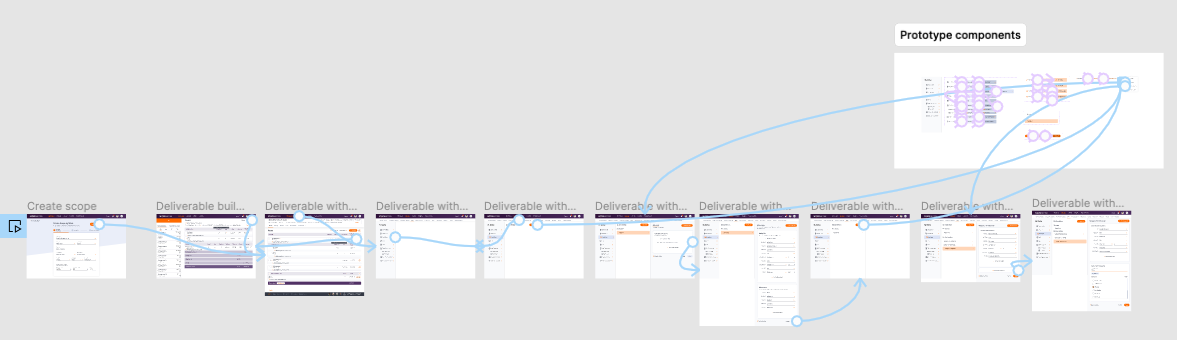
The design was completed in a one-week sprint, from initial mapping to wireframes to a functional prototype, which the sales team took directly to a potential new client.
OUTCOME
The client confirmed the approach would work for them. The feature never shipped in this form — the client came back with a broader brief that evolved into the Scenario Pricing feature — but the conditional logic thinking here directly informed the formula builder that followed. It asked the right questions early enough that the next attempt had a much clearer foundation.
Company
SCOPE Better
Year
2024
Design Tools
Figma and Miro