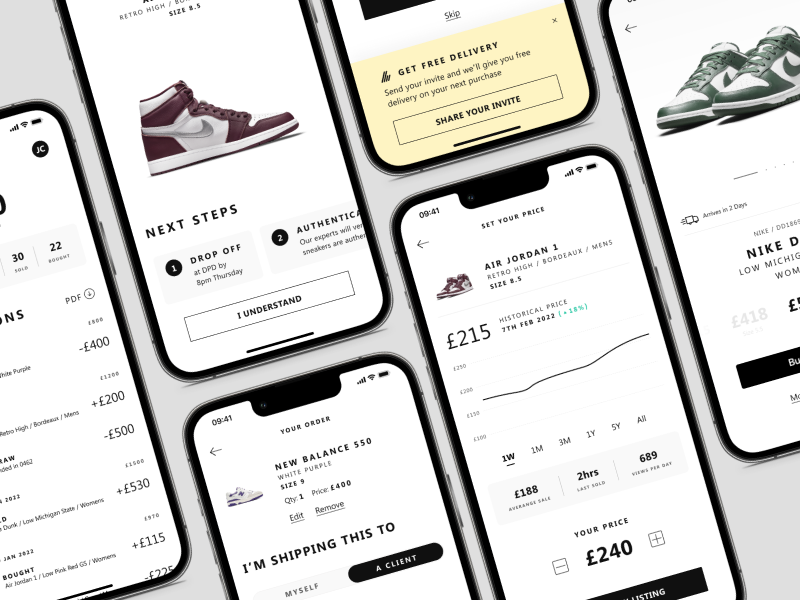



UnLACED. the Returns.
LACED’s return process was manual, slow, and invisible to everyone involved. The impact was simple: customers stopped trusting the platform, and the business was losing money on every return.
DROP in “Why denied?” emails
FEWER returns-related CX tickets
Retention post-return
UNDERSTANDING RETURN PROCESS
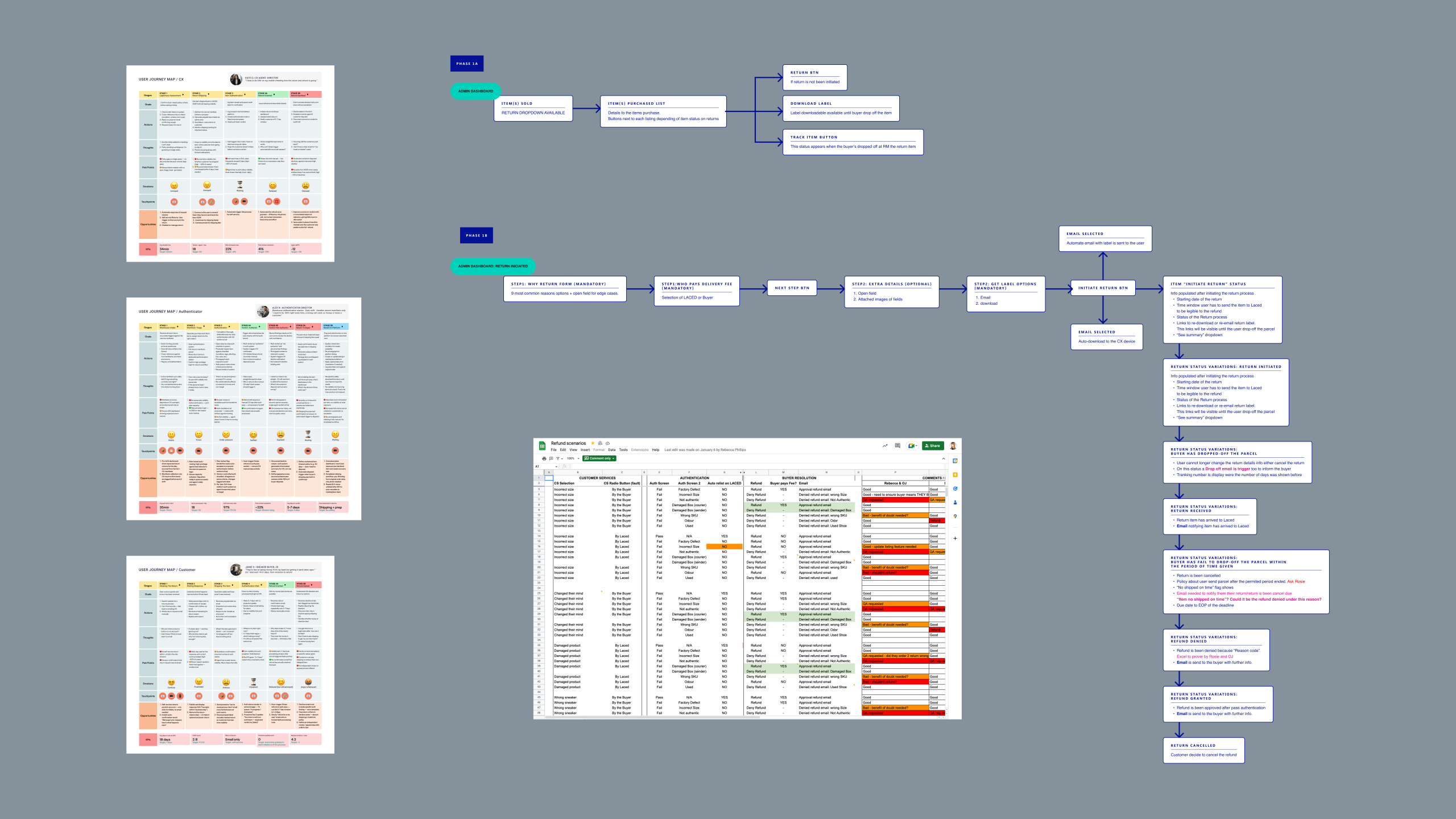
I mapped the full process across three groups: the customer, the CX agent, and the authenticator. All three were frustrated. None of them had visibility into what the others were doing. From the research, I identified 17 return reasons, the most common triggers for a customer to initiate a return. Those were crossed with 9 authentication criteria to determine when a refund should be granted or denied. That logic had never been written down in one place. It became the foundation on which everything else was built.
WHAT I DID
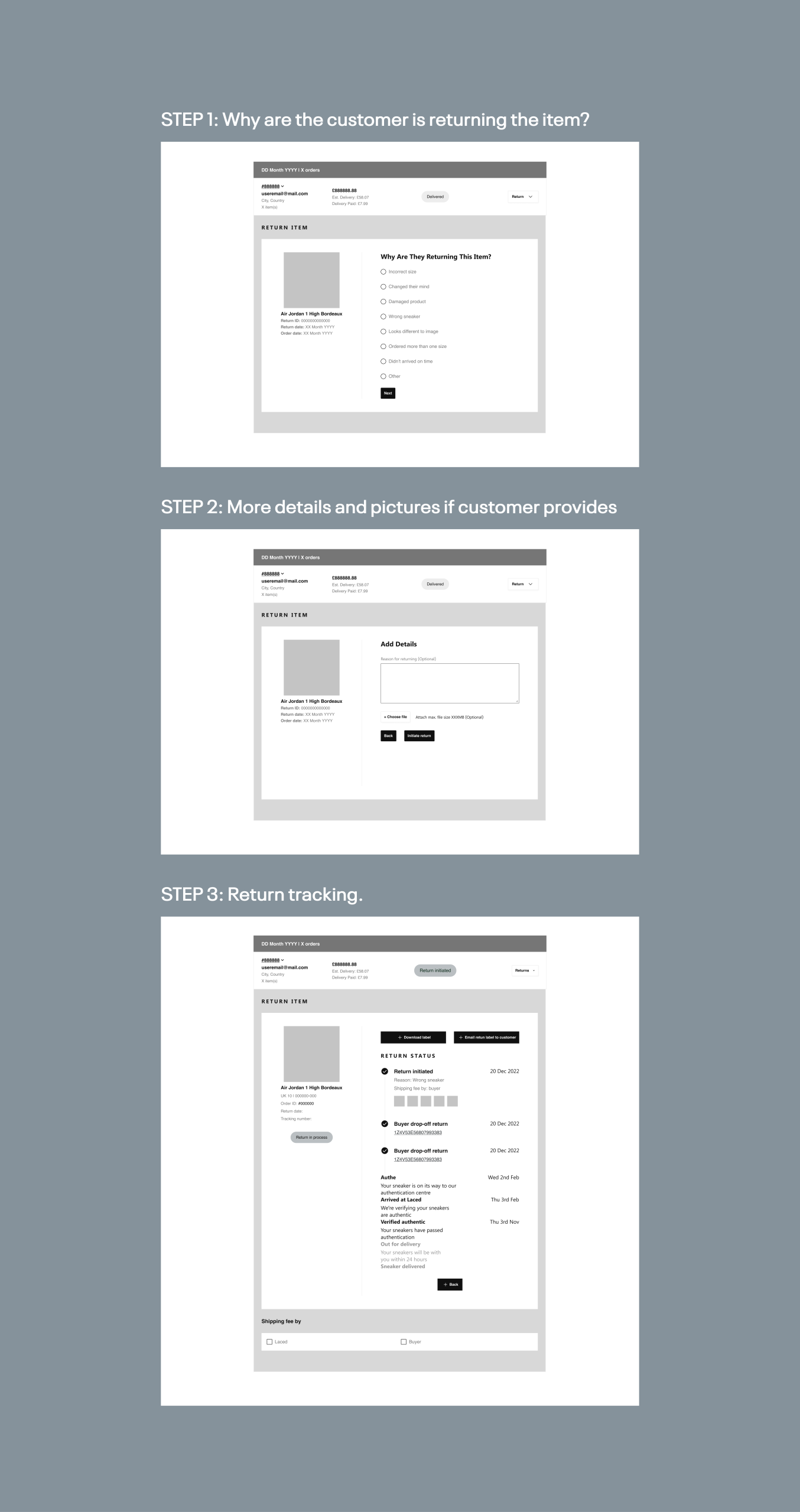
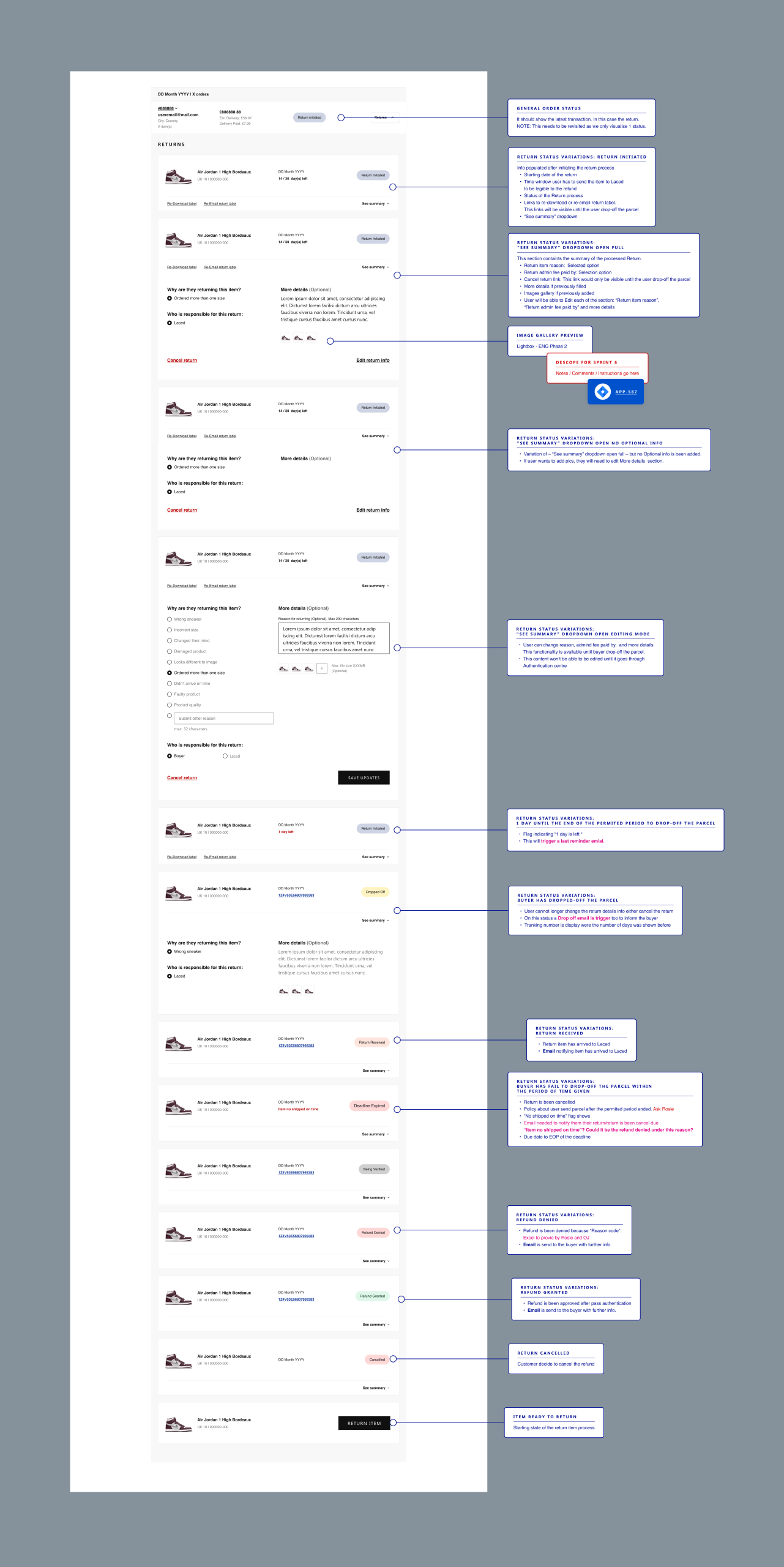
With the logic mapped, I designed the new internal flow. Every return followed a clear, traceable path, from CX triggering the process with the customer’s initial information, through to the authenticator giving a verdict. Refund functionality was available on every eligible purchase within the 14-day SLA window. Manual steps became automatic where possible. Every stage was visible to the people who needed to act on it. The goal was full self-service: customers triggering their own return from their profile without needing to contact CX at all. The original goal was full self-service from day one. We chose not to. Opening customer-triggered returns before the internal process was stable risked overwhelming the team and losing control over volume, storage, and resale. Phase one was deliberate: fix the internal system first, protect the business, then open the doors to customers.
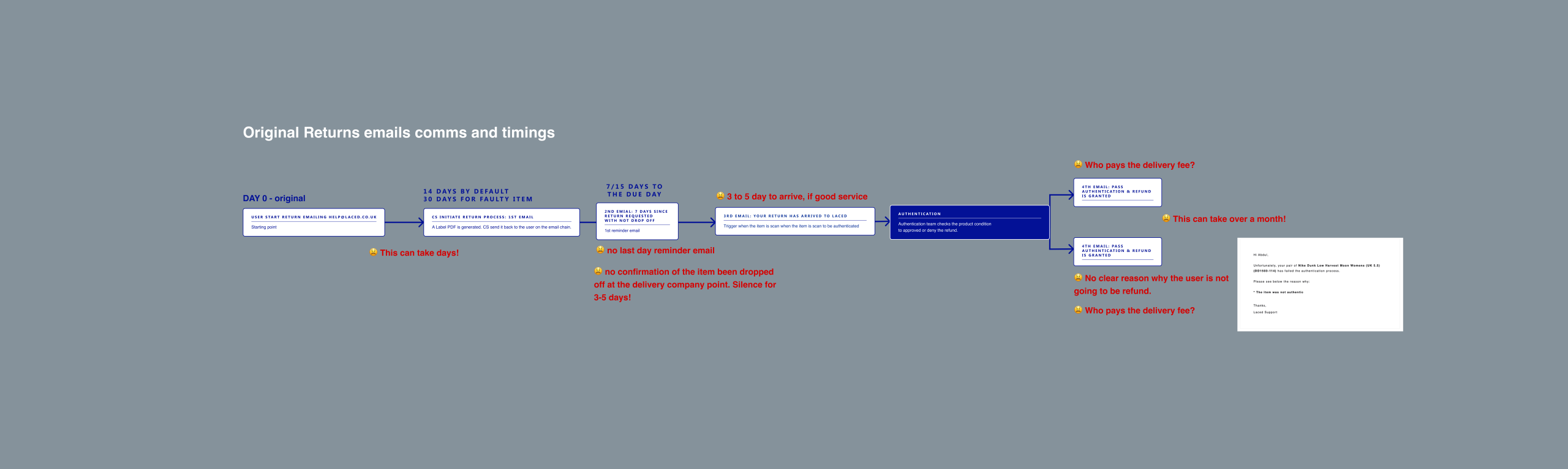
To start rebuilding customer trust in the meantime, I redesigned the communication layer. Previously, it was either silent or a templated rejection with no explanation. Customers now have confirmation that their return was received, updates while the item was being assessed, and a specific reason if their refund was denied.
It wasn’t the full solution from day one, but it was a deliberate compromise between what users needed, what the business wanted, and what the system could handle at that moment.
OUTCOME
Emails asking why a return was denied dropped by 85%. CX tickets fell by 35%. Post-return retention improved by 15%. Where Is My Order tickets dropped by 75% just from making the order status visible. Phase 1 performed so well that the business deprioritised phase 2, the internal process had already solved the core problem.


Company
LACED.
Year
2022-23
Design Tools
Figma and Overflow